
Why Are My Gums Bleeding? Early Signs You Shouldn’t Ignore
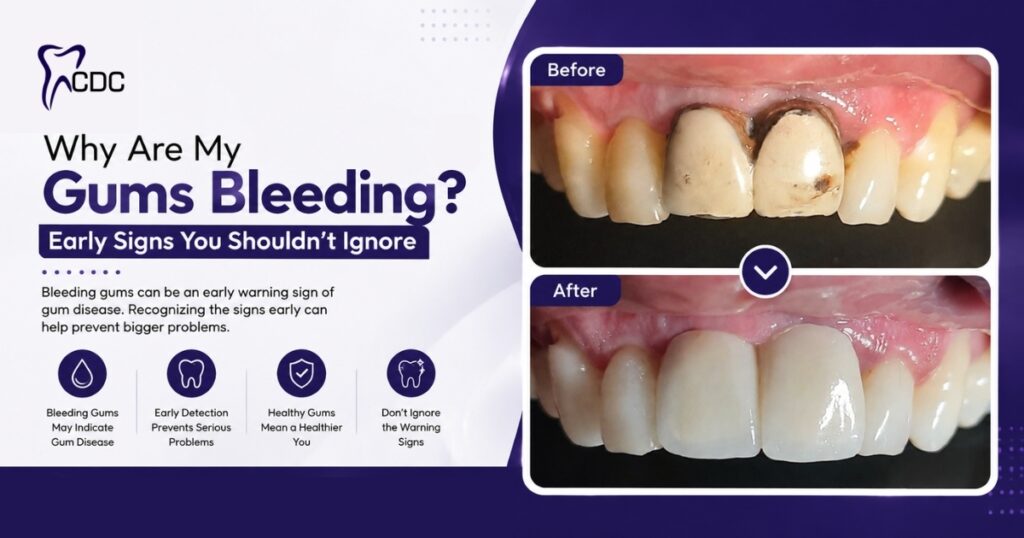
Blood on the toothbrush is unsettling, the sort of thing that makes people quietly google why are my gums bleeding at eleven at night. Brushing too hard can explain the odd spot of blood, but healthy gums shouldn’t bleed regularly. Left alone, small gum problems tend to grow into bigger ones. Catching the early signs matters more than most people realise. What Causes Bleeding Gums, and When Does It Need a Dentist? Plaque build-up, gingivitis, poor brushing habits, hormonal shifts, certain medications, or an underlying health condition- these cover most of what’s behind bleeding gums. If it drags on for several days, or shows up with swelling, pain, or bad breath, see a dentist. Common Causes of Bleeding Gums A few culprits show up more often than others, and knowing them helps you catch problems while they’re still small: Plaque and tartar along the gumline Gingivitis, the early stage of gum disease Brushing too hard, or flossing incorrectly Low Vitamin C or Vitamin K Hormonal changes during pregnancy Blood-thinning medications Tobacco use Underlying medical conditions Some of these pass on their own. Persistent ones don’t. Early Warning Signs Worth Watching For Bleeding rarely shows up alone. Watch for gums that look red, swollen, or tender, breath that stays off no matter how often you brush, gums pulling back from the teeth, sensitivity near the gumline, and in advanced cases, loose teeth or pain while chewing. Catching these early gives treatment a much better shot. When to Worry About Bleeding Gums? A few clear signals mean it’s time to stop waiting: bleeding beyond a week despite better brushing, swollen or painful gums, bleeding without brushing, pus, loose teeth, visible recession, or bad breath that won’t shift. These usually point to something home care alone won’t fix. Call Now Why Treating It Early Actually Matters? Gum disease tends to start quietly. Caught early, professional cleaning and better daily habits often control it without much fuss. Wait too long, though, and bacteria work below the gumline, raising the risk of more serious periodontal damage that can eventually reach the bone. Small Habits That Genuinely Protect Your Gums Good oral hygiene still does most of the work here. Brush twice daily with a soft-bristled brush, floss or use interdental brushes daily, rinse with a dentist-recommended mouthwash, cut back on sugary food and drink, stay hydrated, skip tobacco, and keep up with routine check-ups. When Professional Treatment Becomes Necessary? If home care isn’t enough, it’s time for professional help. Depending on severity, a dentist might recommend scaling, root planing, or other periodontal work to clear plaque beneath the gumline. Anyone searching for Gum Treatment in Navi Mumbai should look for a clinic built around accurate diagnosis and genuine personalised care. Take Bleeding Gums Seriously, Not as Routine Bleeding gums aren’t a normal part of brushing, whatever it might feel like. Usually it’s your body flagging something worth attending to. If you’re after the best dental clinic in Roadpali, or a trusted dental hospital in Roadpali for proper gum care, Chetana’s Dental Clinic offers personalised evaluations and treatment plans built to bring gum health back. Book An Appointment FAQs 1. Why are my gums bleeding when I brush my teeth? Plaque build-up, gingivitis, brushing too hard, or improper flossing are the usual culprits behind bleeding gums. If bleeding continues despite good oral hygiene, book a dental exam to find the underlying cause and get proper treatment. 2. Can bleeding gums heal on their own? Sometimes, yes. Mild irritation often improves with better brushing and flossing. If gum disease is behind it, though, professional treatment usually becomes necessary. Catching early signs sooner prevents things from progressing and protects your teeth and gums longer term. 3. What are the most common causes of bleeding gums? Plaque, gingivitis, vitamin deficiencies, tobacco use, hormonal shifts, certain medications, and poor oral hygiene are among the common causes of bleeding gums. Spotting the reason early lets your dentist recommend the right treatment before damage sets in. 4. When should I worry about bleeding gums? Worrying about bleeding gums comes down to a few signs: bleeding lasting over a week, occurring without brushing, or paired with swelling, persistent bad breath, recession, or loose teeth. These usually mean advancing gum disease needs attention. 5. Can professional gum treatment prevent tooth loss? Yes, generally. Early diagnosis and proper gum treatment control infection, reduce inflammation, and preserve the structures supporting your teeth. Paired with good daily hygiene and regular check-ups, timely care meaningfully lowers the risk of tooth loss. Plaque build-up, gingivitis, brushing too hard, or improper flossing are the usual culprits behind bleeding gums. If bleeding continues despite good oral hygiene, book a dental exam to find the underlying cause and get proper treatment. Sometimes, yes. Mild irritation often improves with better brushing and flossing. If gum disease is behind it, though, professional treatment usually becomes necessary. Catching early signs sooner prevents things from progressing and protects your teeth and gums longer term. Plaque, gingivitis, vitamin deficiencies, tobacco use, hormonal shifts, certain medications, and poor oral hygiene are among the common causes of bleeding gums. Spotting the reason early lets your dentist recommend the right treatment before damage sets in. Worrying about bleeding gums comes down to a few signs: bleeding lasting over a week, occurring without brushing, or paired with swelling, persistent bad breath, recession, or loose teeth. These usually mean advancing gum disease needs attention. Yes, generally. Early diagnosis and proper gum treatment control infection, reduce inflammation, and preserve the structures supporting your teeth. Paired with good daily hygiene and regular check-ups, timely care meaningfully lowers the risk of tooth loss.