Teeth whitening sounds simple enough, but many people hesitate before trying it. One question comes up again and again: will whitening damage my teeth? It’s a fair concern. After all, nobody wants a brighter smile at the cost of weaker or more sensitive teeth.
The good news is that professional whitening, when recommended and carried out correctly, is generally considered safe for suitable patients. The real problem often comes from overusing whitening products, choosing unsuitable treatments, or following random advice found online. Understanding the facts can help you make a much more informed decision.
Teeth Whitening: Does It Really Damage Your Teeth?
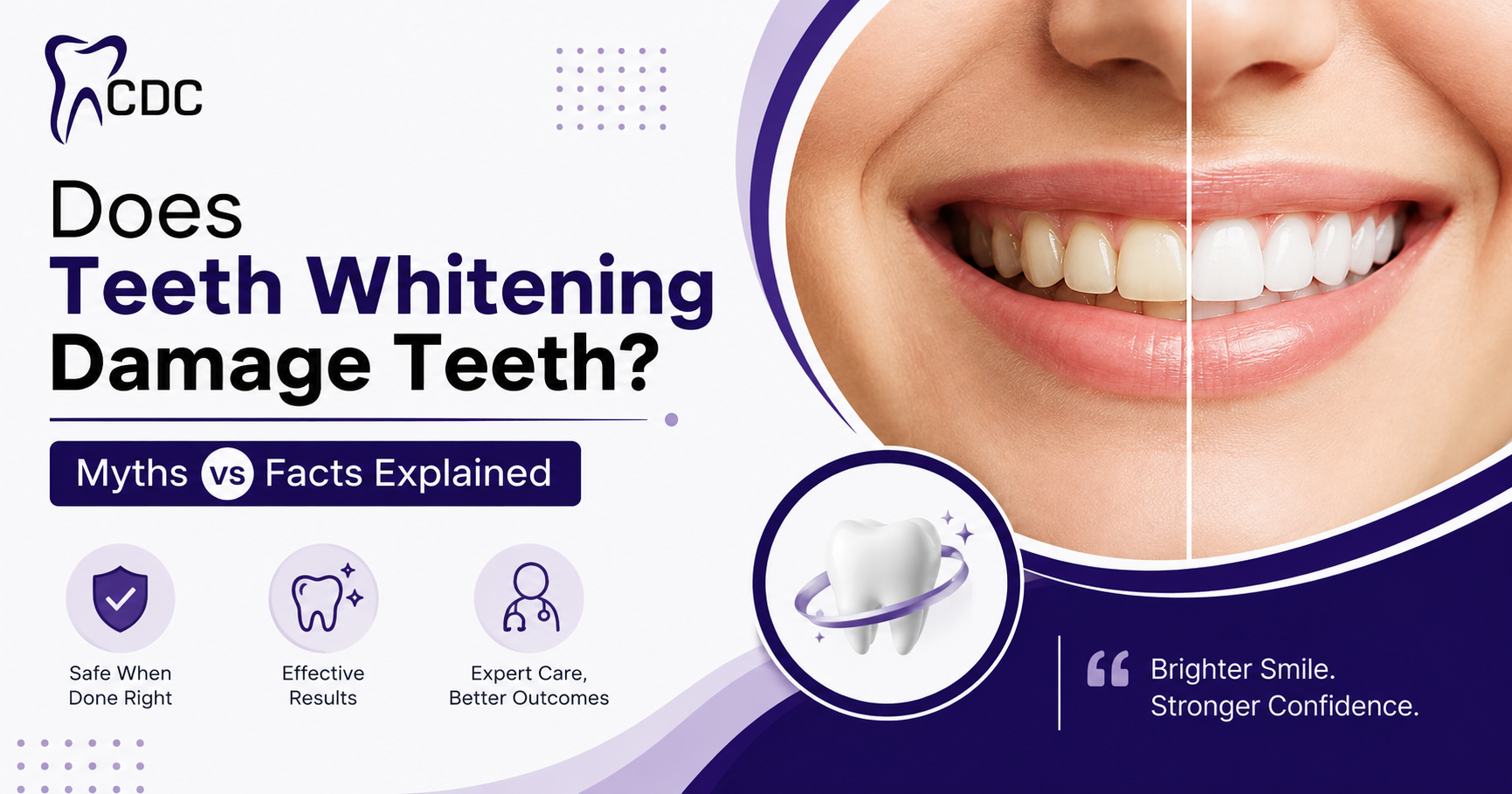
Let’s clear up the biggest myth first. Properly performed Teeth whitening does not normally damage healthy tooth enamel when the appropriate products and concentrations are used correctly.
Professional whitening works by using bleaching agents to break down certain stains and discolouration on the teeth. It doesn’t simply scrape away a layer of enamel to make your teeth appear lighter. That said, whitening isn’t suitable for everyone. Existing cavities, gum problems, worn enamel, or other dental concerns may need attention before treatment.
Why Do Teeth Sometimes Feel Sensitive Afterwards?
This is probably where the confusion comes from. Some people experience temporary tooth sensitivity after whitening. You might notice a short, sharp sensation when drinking something cold or hot. It can be uncomfortable, but temporary sensitivity doesn’t automatically mean your enamel has been damaged.
The sensitivity usually settles after treatment. Your dentist can also advise you on ways to manage it and whether whitening is appropriate for your teeth in the first place. If you already have sensitive teeth, mention it before starting treatment rather than trying to push through discomfort.
Myth: Whiter Teeth Always Mean Healthier Teeth
Not quite. A brighter smile can certainly make you feel more confident, but tooth colour isn’t a direct measure of dental health. A person can have naturally yellowish teeth and excellent oral health, while someone with very white teeth may still have cavities or gum disease.
Whitening is primarily a cosmetic treatment. Regular brushing, flossing, dental check-ups, and professional cleaning remain important for keeping your mouth healthy.
Myth: Store-Bought Products Are Always Safer
Not necessarily.
Whitening strips, gels, pens, toothpastes, and other home products can be useful in certain situations, but their effectiveness and suitability vary. Using products too frequently or leaving them on for longer than recommended won’t necessarily produce better results.
A dental professional can assess your teeth first and recommend an approach based on your oral health and the type of staining you have.
Professional Teeth Whitening in Navi Mumbai: What to Expect
If you’re considering Teeth Whitening in Navi Mumbai, start with a dental consultation rather than choosing a treatment based solely on price or advertisements.
At Chetana’s Dental Clinic, teeth whitening is one of the clinic’s dedicated departments. The clinic offers different whitening approaches, including bleaching strips, bleaching pens, bleaching gels, and laser bleaching, depending on the patient’s requirements.
A proper assessment helps determine whether whitening is suitable and what type of treatment may give you a natural-looking result.
Choosing a Teeth Whitening Specialist in Navi Mumbai
Experience matters when you’re having a cosmetic dental procedure.
A Teeth whitening specialist in Navi Mumbai can examine your teeth, identify the likely cause of discolouration, and explain what kind of result you can realistically expect. This is particularly useful if you have fillings, crowns, veneers, sensitive teeth, or existing dental problems.
It’s also worth remembering that whitening doesn’t change the colour of dental restorations. Your dentist can explain this before treatment so you know exactly what to expect.
How Can You Protect Your Results?
Whitening isn’t a permanent solution. Your teeth can gradually become darker again, particularly if you regularly consume tea, coffee, red wine, or other staining foods and drinks.
Good oral hygiene goes a long way. Brush twice a day, clean between your teeth, attend regular dental check-ups, and follow any aftercare advice provided by your dentist.
Most importantly, don’t keep whitening your teeth simply because you want them to become lighter and lighter. There’s a point where more treatment isn’t necessarily better.
Conclusion
Teeth whitening doesn’t have to be something you fear. When your teeth and gums are assessed first, and the treatment is carried out appropriately, professional whitening can safely improve the appearance of your smile. If you’re considering Teeth Whitening in Navi Mumbai, choosing an experienced dental team is far more sensible than experimenting with excessive or unsuitable products at home. Chetana’s Dental Clinic, established by Dr Chetana Kulkarni, combines modern dental care with personalised treatment planning to help patients achieve brighter, natural-looking smiles.
FAQs
1. Is Teeth Whitening safe for healthy teeth?
Yes, professionally supervised Teeth whitening is generally considered safe for suitable patients when the recommended products and treatment methods are used correctly. Some people may experience temporary sensitivity, but this doesn’t necessarily indicate enamel damage. A dental examination beforehand is important to check whether whitening is appropriate for you.
2. How can I find a Teeth whitening specialist in Navi Mumbai?
When looking for a Teeth whitening specialist in Navi Mumbai, consider the dentist’s experience, available treatment options, approach to patient assessment, and the clinic’s overall dental facilities. A good consultation should explain the cause of your staining, suitable whitening options, expected results, possible sensitivity, and aftercare.
3. Is Teeth Whitening in Navi Mumbai suitable for everyone?
Not necessarily. Teeth Whitening in Navi Mumbai may not be appropriate if you have untreated cavities, certain gum problems, damaged enamel, or other dental concerns. Existing crowns, fillings, and veneers also don’t whiten like natural teeth. Your dentist can examine your mouth and advise whether treatment is suitable.
4. Can teeth whitening permanently remove stains?
Whitening can significantly improve many types of tooth discolouration, but the results aren’t permanent. Teeth can gradually pick up new stains from foods, drinks, smoking, and natural ageing. Maintaining good oral hygiene and following your dentist’s advice can help your brighter smile last for longer.
5. Does teeth whitening damage enamel or make teeth weak?
When performed appropriately on suitable teeth, professional whitening does not normally make healthy enamel weak. However, excessive use or unsuitable products can cause problems such as increased sensitivity and gum irritation. That’s why it’s better to have your teeth assessed by a dentist before starting any whitening treatment.