Dental pain can make even the simplest daily activities difficult. When a tooth is severely damaged or infected, your dentist will usually recommend either a Root canal treatment or a tooth extraction. While both procedures address pain and infection, they serve very different purposes and have distinct long-term outcomes.
Understanding the differences between these treatment options can help you make an informed decision based on your oral health, budget and future dental needs.
Root Canal Treatment or Tooth Extraction – A Quick Comparison
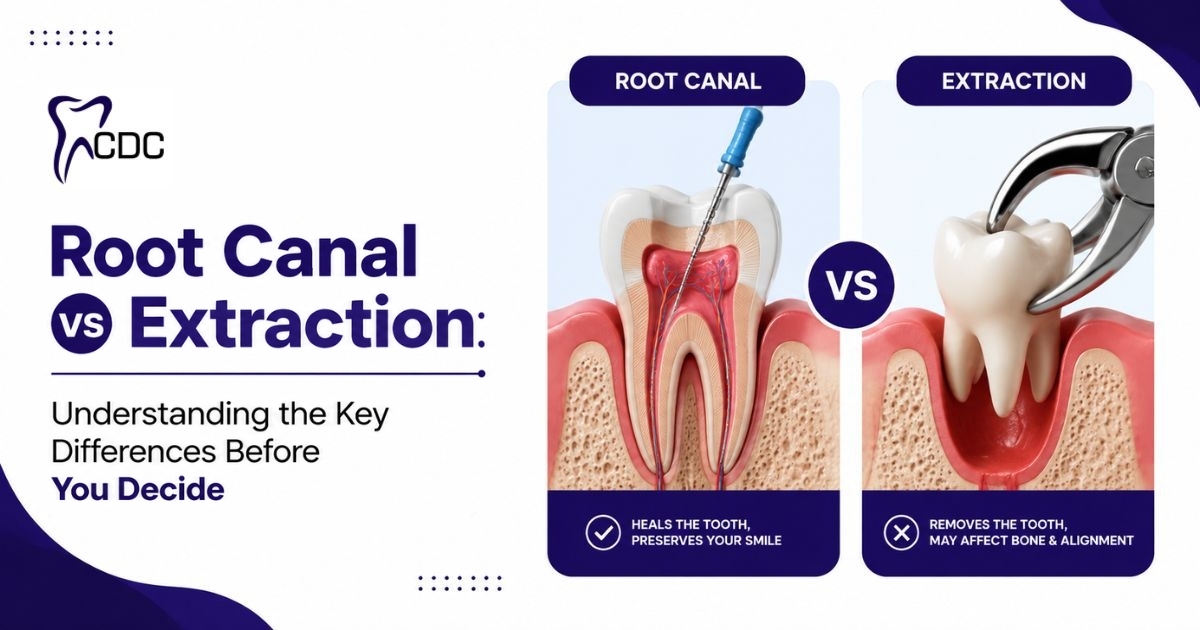
A root canal procedure removes infected pulp while preserving the natural tooth, making it the preferred choice whenever the tooth can be saved. Extraction removes the entire tooth and may require replacement with an implant, bridge or denture to restore function. The right option depends on the tooth’s condition, surrounding bone support and your dentist’s clinical assessment.
What Is Root Canal Treatment?
Root canal treatment is a restorative dental procedure designed to save a tooth affected by deep decay, infection or trauma. During treatment, the infected pulp is removed, the canals are cleaned and disinfected, and the tooth is sealed before being restored with a suitable filling or crown.
Modern techniques, digital imaging and improved anaesthesia have made the procedure significantly more comfortable than many people expect. Preserving your natural tooth also helps maintain normal chewing function and prevents neighbouring teeth from shifting.
What Is Tooth Extraction?
A tooth extraction involves removing the entire tooth from its socket. Dentists generally recommend extraction only when the tooth cannot be restored because of extensive damage, advanced gum disease, severe fractures extending below the gum line or inadequate supporting bone.
Although extraction immediately removes the source of infection, the resulting gap often requires replacement to maintain bite alignment, speech and chewing efficiency.
Root Canal vs Extraction: The Key Differences
Preserving Your Natural Tooth
A root canal retains the original tooth structure, whereas extraction permanently removes the tooth. Keeping your natural tooth usually offers better long-term oral function and aesthetics.
Treatment Objective
The goal of a root canal is to eliminate infection while restoring the tooth. Extraction focuses on removing a tooth that is no longer clinically restorable.
Recovery and Healing
Most patients return to routine activities within a day after a root canal. Extraction may involve additional healing time, especially if surgical removal is required or future tooth replacement is planned.
Long-Term Cost Considerations
Although extraction may appear less expensive initially, replacing the missing tooth with a bridge, denture, or implant often increases the overall treatment cost. Saving a tooth can therefore be more economical over time.
Impact on Oral Health
Maintaining natural teeth supports jawbone health, chewing efficiency and proper alignment. Missing teeth may contribute to bone loss and movement of adjacent teeth if left unreplaced.
When Is Root Canal Treatment the Better Choice?
Dentists usually recommend a root canal when the infection is confined within the tooth and enough healthy structure remains for restoration. It is often the preferred option for patients who wish to preserve their natural smile, maintain normal bite function and avoid more extensive restorative procedures later.
When Might Extraction Be Necessary?
Extraction becomes the more appropriate option when the tooth cannot be predictably restored due to extensive structural damage, severe periodontal disease, irreparable fractures or persistent infection despite previous treatment. Every decision should be based on a thorough clinical examination and diagnostic imaging.
Making the Right Decision
Choosing between a root canal and extraction should never depend on immediate pain relief alone. Factors such as long-term oral health, overall treatment costs, aesthetics, chewing ability and future dental care all play an important role. Consulting the best dental clinic in Navi Mumbai ensures the treatment plan is tailored to your specific clinical needs.
If you are considering root canal treatment in Navi Mumbai, choosing an experienced team is essential. Chetana’s Dental Clinic offers personalised treatment planning, advanced diagnostic technology and patient-focused care to help preserve your oral health whenever possible.
FAQs
1. Is a root canal more painful than a tooth extraction?
With modern anaesthesia and contemporary techniques, Root canal treatment is generally no more uncomfortable than receiving a routine filling. Mild soreness after either procedure is normal, but most patients manage it with prescribed or over-the-counter medication and resume normal activities within a short period.
2. Which option is more cost-effective in the long run?
Although extraction often costs less initially, replacing the missing tooth with an implant, bridge or denture can significantly increase overall expenses. Preserving a natural tooth usually provides better long-term value by maintaining function, reducing future restorative needs and supporting overall oral health.
3. How do I know if I need root canal treatment?
Persistent toothache, prolonged sensitivity to hot or cold, swelling, tenderness while chewing or a recurring gum pimple may indicate infection inside the tooth. If you’re considering root canal treatment in Navi Mumbai, prompt dental evaluation improves the likelihood of preserving the affected tooth successfully.
4. Can I leave a damaged tooth untreated instead of choosing either procedure?
Delaying treatment can allow infection to spread to surrounding tissues, increasing pain and the risk of complications. Early diagnosis enables dentists to recommend the most suitable option, helping protect neighbouring teeth, preserve oral function and avoid more extensive treatment in the future.
5. How do I choose the right dental clinic for treatment?
Look for experienced dentists, advanced diagnostic technology, transparent treatment planning, strong patient reviews and comprehensive follow-up care. Selecting the best dental clinic in Navi Mumbai ensures accurate diagnosis, evidence-based treatment recommendations and personalised care focused on preserving your long-term oral health whenever possible.